
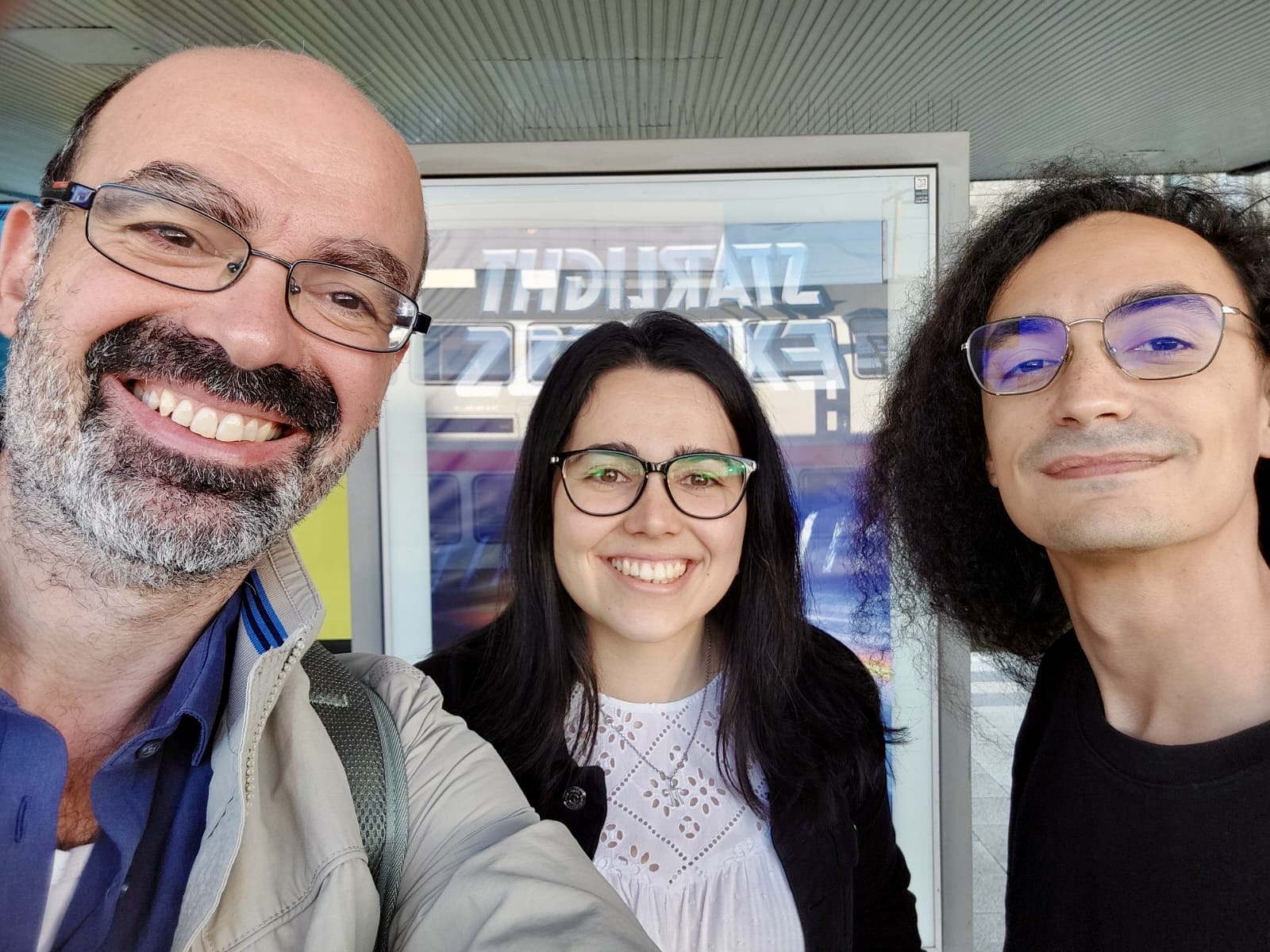
The 14th International Symposium on Imprecise Probabilities: Theories and Applications, ISIPTA 2025, took place in Bielefeld University (Bielefeld, Germany) on 15-18 July 2025. The programme of this event consisted in 4 keynote talks and 8 non-parallel sessions, each of which was divided in two parts. In the first part, the researchers gave a short presentation (either 4 or 9 minutes) about their works, whereas in the second one, there was one-hour poster session dedicated to discussing the topic. David Nieto-Barba, Enrique Miranda and Marina Iturrate-Bobes attended this conference.
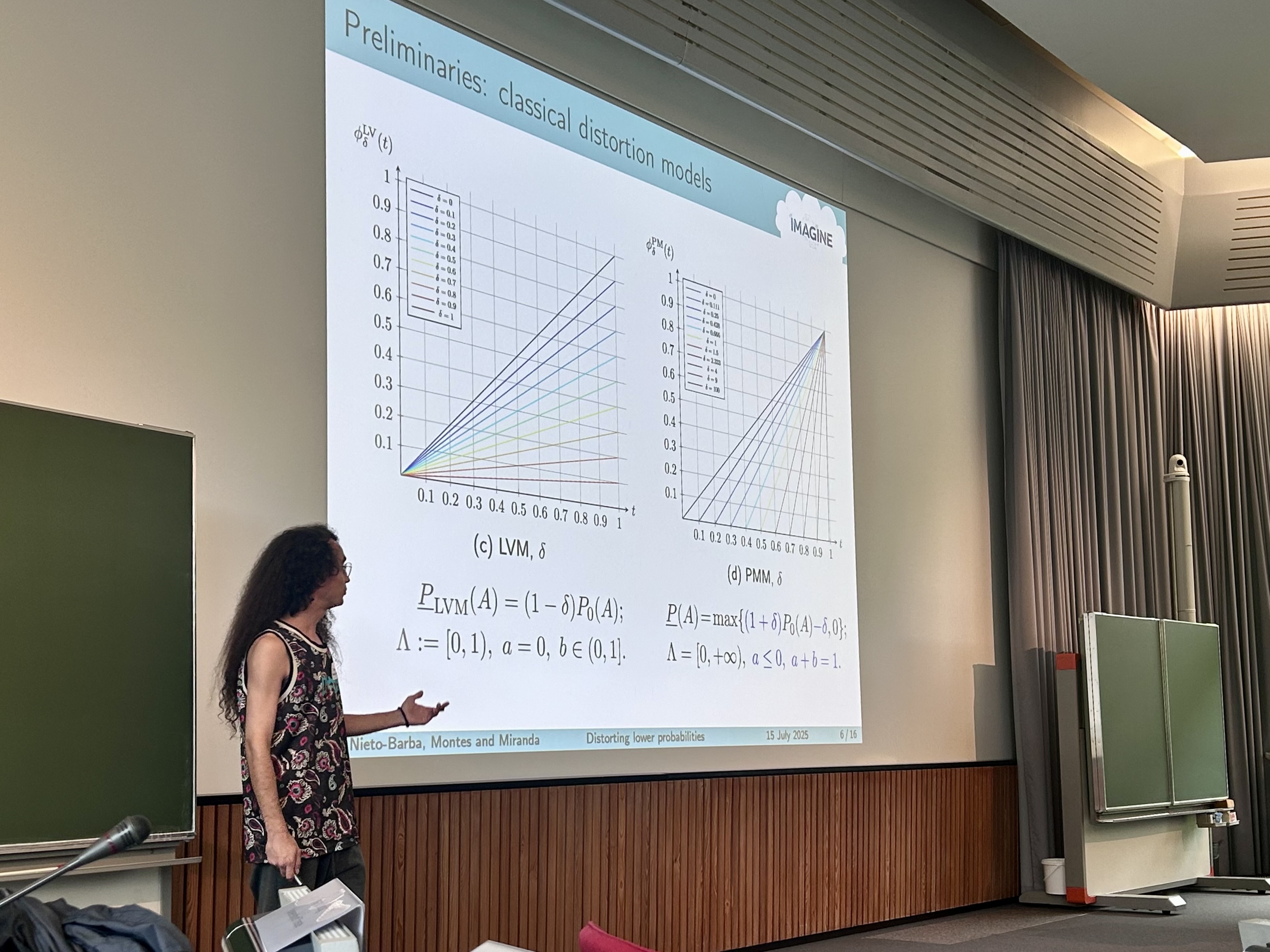
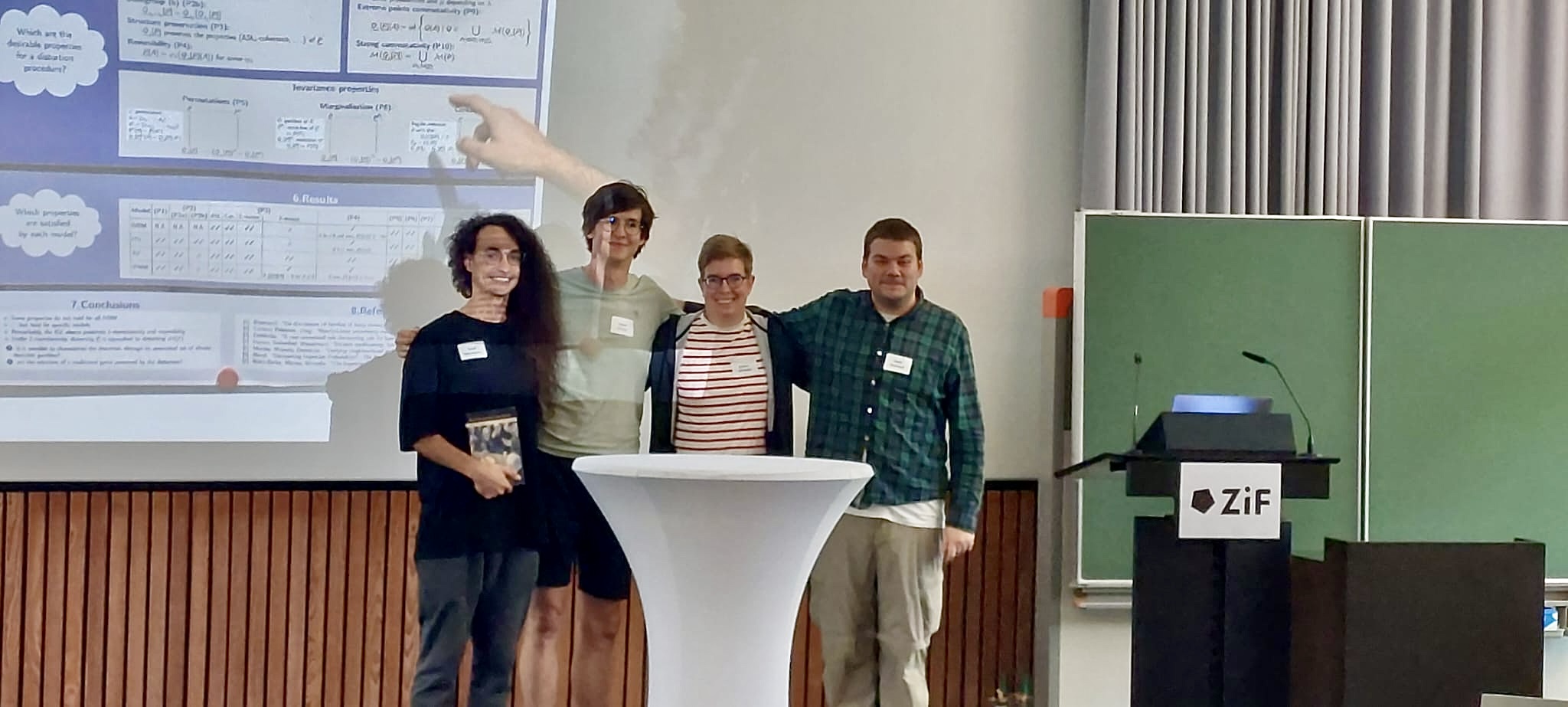
David Nieto-Barba presented his work entitled “Distorting lower probabilities using common distortion models” done in collaboration with Ignacio Montes and Enrique Miranda on 15 July. He discussed the generalisation of several prominent distortion models to the case of an initially imprecise model. More concretely, imprecise extensions of the Vertical Barrier Models (which include the Linear Vacuous and Pari-Mutuel Model, as well as the Total Variation Model) were introduced; and a number of desirable properties were analysed in this context, for the purpose of enhancing robustness of already imprecise models His poster was awarded with the 3rd Price Poster Award.
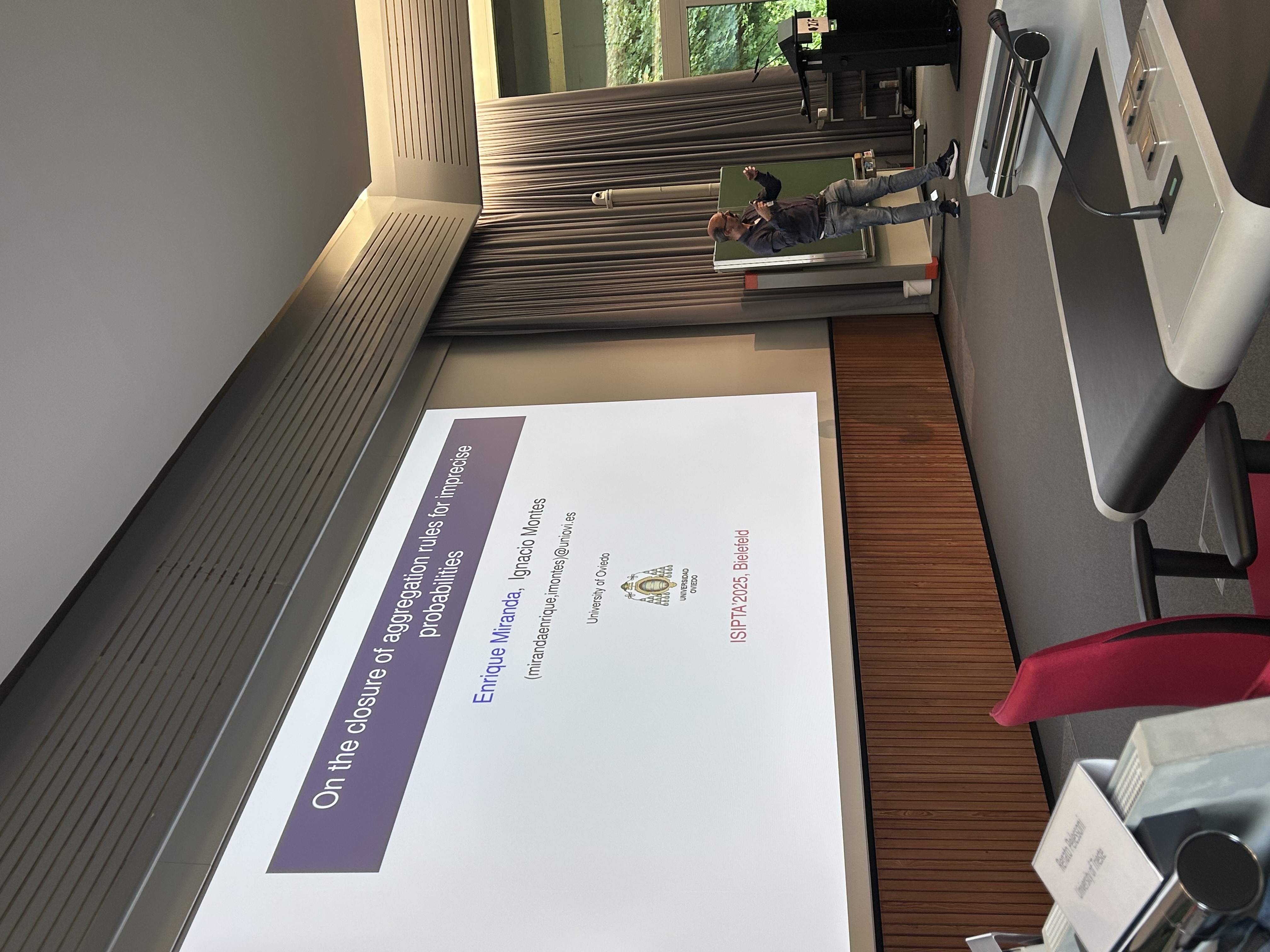
Enrique Miranda’s work (in collaboration with Ignacio Montes) was entitled “On the closure of aggregation rules for imprecise probabilities”. He gave his presentation on 15 July, in which he discussed the problem of aggregating several imprecise probability models using different aggregation rules, investigating whether the aggregation rules are closed in the sense that the aggregated model belongs to the same family as the inputs. Moreover, he was elected as the President of the Society for Imprecise Probabilities for the period 2025-2027.
On 17 July, Marina Iturrate-Bobes presented her work “How do normality tests behave for rounded data?” in collaboration with Ignacio Montes and Raúl Pérez-Fernández. In this contribution, she tackled this topic from the perspective of random sets, which were used as a model to explain how the most extended normality tests (Anderson-Darling, Lilliefors and Shapiro -Wilk) are affected when the data is rounded. For this purpose, she explored the power of the three tests and their respective acceptance, indecision and rejection regions.
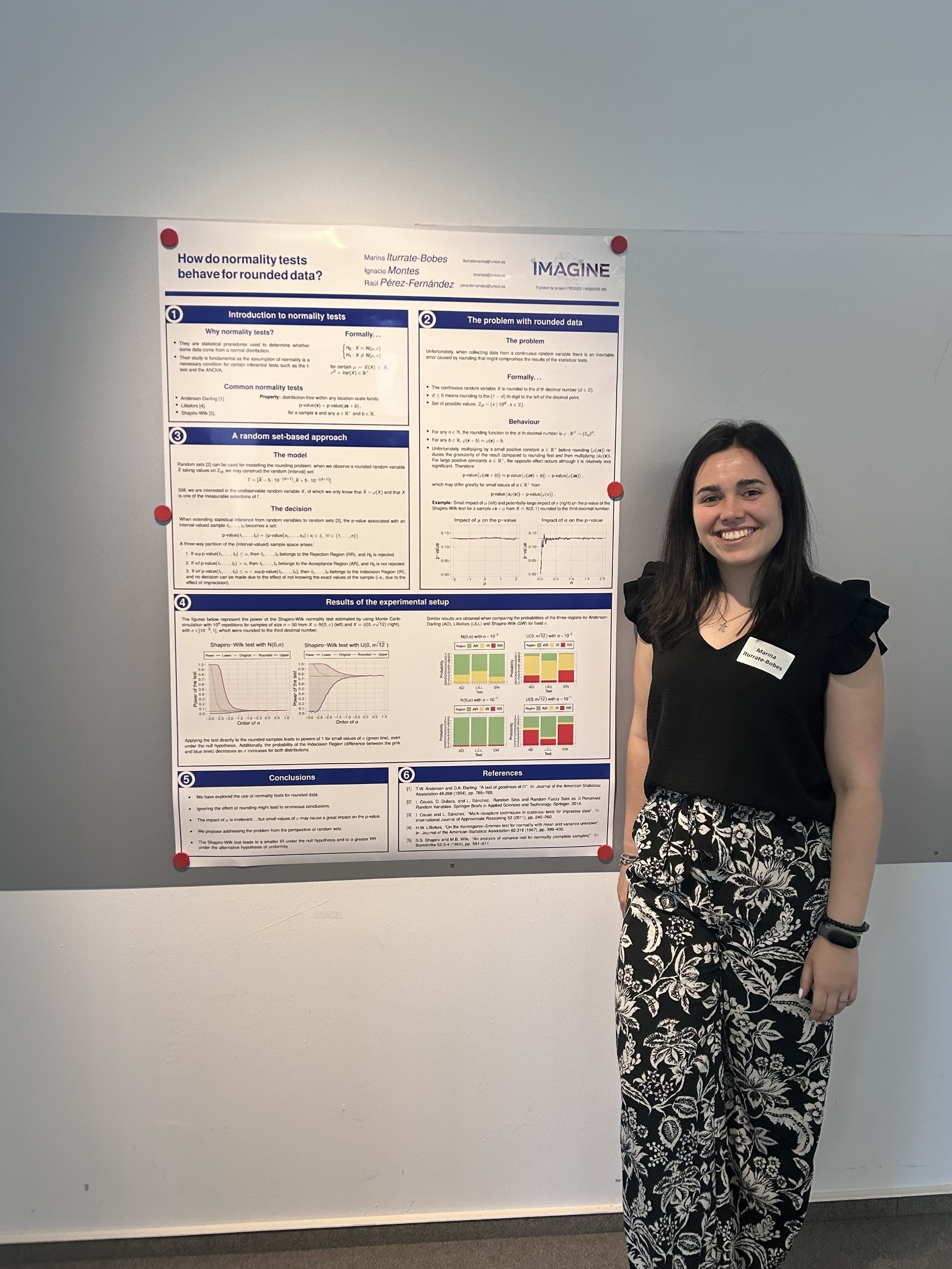
This conference format provided participants with the opportunity to hold discussions and exchange ideas. The poster discussion sessions of David, Enrique and Marina were all well attended, which allowed them to have quite interesting discussions with other researchers. Furthermore, the well-organized social program was also enriching. From here, we extend our gratitude to the organizers and look forward to participating in the next ISIPTA Conference.